University of Westminster

The European Hub for Cultural Psychology at the University of Westminster follows the larger approach of Cultural Psychology established by Prof Jaan Valsiner. We are committed to critical and multi-professional discourse. Our transnational structure fosters both cross-border research collaboration and transcultural communication. We strive to promote human rights-based, democratic and polyvalent societies. A key building block for this is the personal development of our students, which is considered as important as academic and professional skills.
Research
Cultural psychology research projects focus on understanding and describing (developmental) processes and clinical and social, cultural and political phenomena in order to derive general principles and practice guidelines.
Psychological, social, and cultural realities are viewed as the result of social construction and negotiation processes, focusing clearly on the subjective views of the people being studied. As people are seen as open systems in constant flux, the context and era in which they operate, and which they actively help to shape, play a key role.
Methodologically, qualitative approaches are frequently employed, including, but not limited to, Discourse Analysis and Discursive Psychology, often focusing on social interaction, learning, and identity within the context of mobility and displacement. Other approaches include Developmental Work Research and Activity Theory, which focus on transformative agency and learning. We also utilise methods such as ethnographic observation (including autoethnography) and visual methods. We aim to develop participatory research approaches in our current projects, examining the experiences of refugees and diaspora communities worldwide.
How to get involved?
Westminster Students (UG/PGT)
- BSc and MSc Programmes: Students are given the opportunity to explore their own topics from a cultural-psychological perspective and to investigate them in small-scale case studies. These projects are typically presented at the end of the academic year in the form of a final-year project (BSc) and a dissertation (MSc). This process provides experience, feedback and stimulates introspection, allowing students to decide whether to continue the research as part of their master’s thesis and/or publish the projects
- Thematic Guidance: Opportunities exist for dissertation supervision across UG and MSc psychology programmes, including qualitative research methods.
- Conference Participation: Students are encouraged to participate in major international events, such as the ISCAR, ISTP and Dialogical Self Conference, which feature symposia on topics like the dialogicality of I-Positions in challenging situations.
Other Students
- Students from other universities are welcome to network and collaborate with our students or faculty where there is a thematic fit.
- Ms Freja Lund from Aalborg University, Denmark, spent her three months as a visiting researcher.
- Visiting scholars in the field of ISCAR and CHAT research community include:
- Dr Eiji Tsuchikura, Hosei University, Tokyo is based at the University of Westminster (from April 2025 to March 2026).
- Other visitors:
- Dr Atsuhi Tajima, Tokyo University for Foreign Studies (Autumn, 2025)
- We have collaborative links, including with the University of Aalborg (Denmark) and Ritsumeikan University (Japan), which may allow for organising research internships depending on thematic fit and capacity.
Ph.D. Students: We welcome PhD applications linked to Cultural Psychology and other related theoretical and methodological approaches.
- Dr Murakami is currently the PhD Coordinator in Psychology at Westminster and has experience and expertise in supervising doctoral students using qualitative methods like Discourse Analysis and Grounded Theory on various topics in psychology, education and other social sciences and humanities.
Scientists
- We welcome inquiries about cooperation projects.
- We are interested in promoting the exchange of teaching and research staff (e.g., through Erasmus Plus). Dr. Murakami has collaborated on funded research with international partners on topics such as the Cultural-Historical Process and Activity Theory.
Activities
- Reading group
- Soundboard sessions
- Interns & Visting researchers
- Research supervision for MSc and PhD in psychology
- Post-graduate conferences and training workshops
- Publishing for international peer-reviewed journals
- Presenting papers at ISCAR and CHAT-related conferences, workshops and seminars
- Contributing expertise, including editorial board service)
- Knowledge transfer & Open science (including workshops on Haiku and The Way of Tea, and projects with the Imperial War Museum and non-profit community organisations for refugee voices)
Representative
Dr Murakami holds a PhD in Psychology from Loughborough University, where her thesis focused on Revisiting the past: Social organisation of remembering and reconciliation. She is currently a Lecturer in Psychology at the University of Westminster. Her academic career includes appointments as an associate professor in psychology at the University of Copenhagen and as a lecturer in education at the University of Bath. Her involvement in the field includes being an Executive Committee Member of the International Society for Theoretical Psychology (ISTP), and she previously project-managed the David Parkin Visiting Professorship Fund to facilitate work with Prof Jaan Valsiner. Dr Murakami also serves as a Journal Editorial Board Member for Culture & Psychology and served as an editor for conference proceedings for ISTP.
Research Interests: Her interests are rooted in Discourse Analysis, Cultural Psychology, Activity Theory and Discursive Psychology. Key research topics include:
- Social remembering, reconciliation, and memory, often relating to the Second World War, the Burma campaign, and Anglo-Japanese relations.
- Identities, dialogism, and transformative agency.
- Intercultural communication and ageing (e.g., Growing Older with Haiku).
- The materiality of memory (e.g., the Remembrance Poppy).
- The Art of Silence and dialogue in cultural practices such as the Way of Tea (Chado).
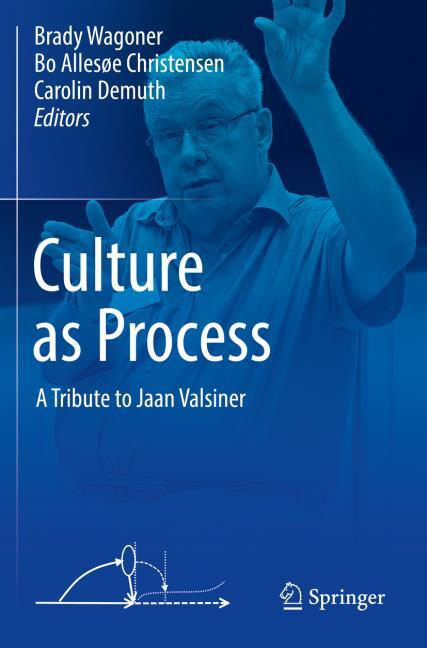
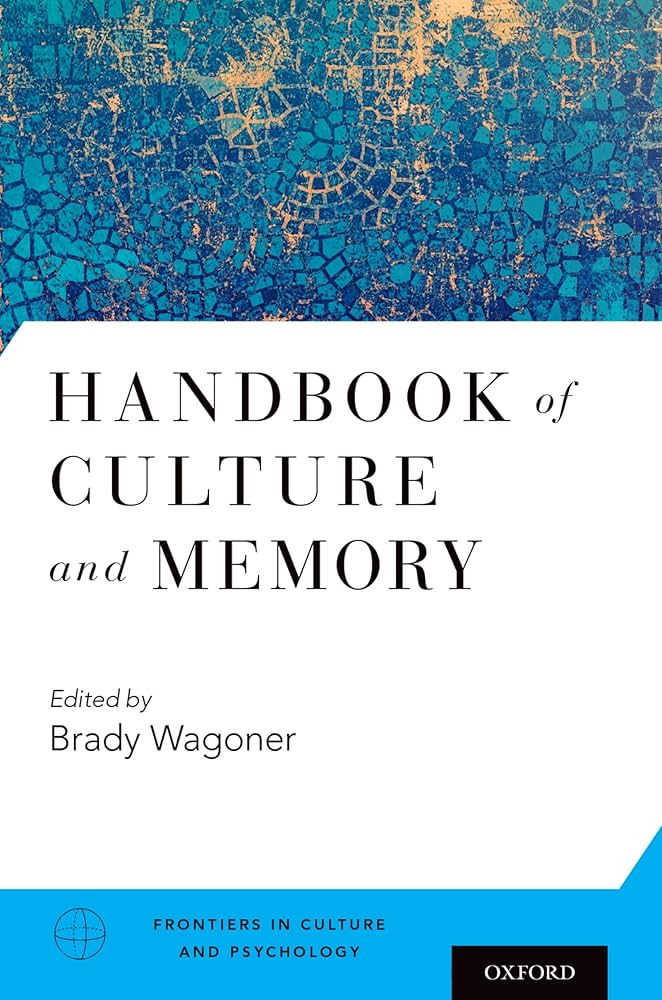
Books/book chapters (selection):
Articles and paper presentations (selection):
- Murakami, K. (2025). Remembering the Second World War’s Burma campaign with the descendants of Japanese fighters on the 80th anniversary of VJ Day.
- Lehmann, O. V., & Murakami, K. (2024). Silence as a magnifying glass for uncertainty and affect: The qualitative case studies of Karin and Dana’s journals. Culture & Psychology, 30(4), 1107–1129. https://doi.org/10.1177/1354067X241253658
- Murakami, K. (2018). The art of dialogic silence in the way of tea: rethinking space and time for contemplation. International Journal Of Heritage Studies, 25(1), 43–53. https://doi.org/10.1080/13527258.2018.1448881
- Murakami, K. (2007). Positioning in accounting for redemption and reconciliation. Culture & Psychology, 13(4), 431–452. https://doi.org/10.1177/1354067X07082803